Insurance
Why is home insurance getting harder in Porter Ranch — and what helps?
Updated August 2026
By Porter Ranch Pros — an independent resource for Porter Ranch homeowners.
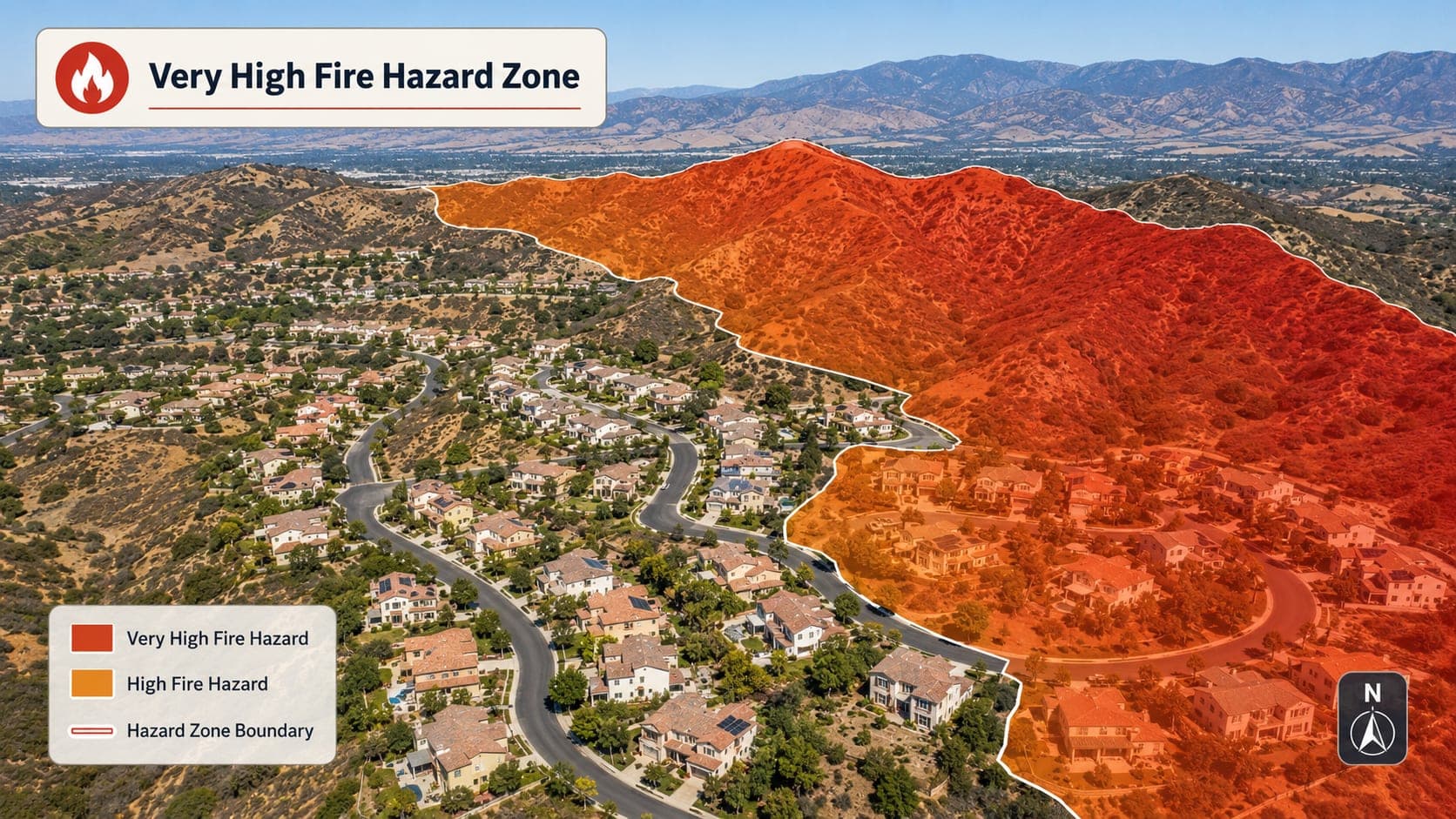
Because much of Porter Ranch is mapped as very high fire hazard, and California's insurance market has spent several years pulling back from exactly that kind of ZIP code — major carriers limited new policies or issued non-renewals, and hundreds of thousands of California homes moved onto the state's FAIR Plan as a fallback. What helps: state reforms now push participating insurers to write more policies in high-risk areas, insurers must offer discounts for specific wildfire-hardening steps, and homeowners who document that hardening keep the most options open.
What actually happened to the market
Starting around 2023–2024, several major insurers paused new California homeowners policies or non-renewed existing ones, citing wildfire losses and the cost of reinsurance. Homeowners who couldn't find a standard policy landed on the California FAIR Plan — the state-created insurer of last resort — which grew to a record of more than 668,000 residential policies by late 2025, per FAIR Plan figures. The January 2025 Los Angeles wildfires then hit the Plan with billions in claims, and FAIR Plan rates have risen substantially in the time since. None of this is specific to Porter Ranch — but fire-zone ZIP codes like the 91326 are where it's felt most.
An occasional email for Porter Ranch homeowners — seasonal reminders and new guides. Nothing else.
What the FAIR Plan is — and isn't
The FAIR Plan covers fire and a short list of other perils, with less coverage than a standard homeowners policy — which is why it's typically paired with a separate "difference in conditions" (DIC) policy that fills in things like water damage and liability. The combination usually costs more than the standard policy it replaced. It's a bridge, not a destination: the goal for most households is getting back to a standard insurer.
| California FAIR Plan | Standard homeowners policy | |
|---|---|---|
| What it covers | Fire and a limited set of perils | Full standard perils (fire, water damage, liability, etc.) |
| Typically paired with | A DIC (difference in conditions) policy for fuller protection | Nothing extra needed |
| Typical cost | Usually more than the standard policy it replaces (FAIR + DIC combined) | Baseline |
| Role | A bridge — insurer of last resort | The destination |
The reforms working in your favor
Under the state's Sustainable Insurance Strategy, the Department of Insurance now lets participating insurers use forward-looking catastrophe models and reinsurance costs in their rates — and in exchange, those insurers commit to writing at least 85% of their statewide market share in high-risk, underserved areas. As of mid-2026, several major carriers have announced expanded California writing under the program, including efforts to move homes off the FAIR Plan. Translation for the 91326: standard-market options are slowly reopening for well-maintained, hardened homes.
What actually helps: hardening, documented
California's Safer from Wildfires framework, from the Department of Insurance, requires insurers to recognize specific hardening steps with discounts — things like a Class A fire-rated roof, ember-resistant vents, defensible space compliance, and clearing the five feet closest to the structure. Do the work, photograph it, keep receipts, and mention it explicitly when shopping. Compliance with LAFD brush clearance is the baseline — our brush clearance guide covers those requirements. For the roof itself, a roofer can tell you what class your current roof carries.
| Hardening step | Why insurers credit it | How to document it |
|---|---|---|
| Class A fire-rated roof | Recognized under Safer from Wildfires | Roofer's confirmation of roof class; receipts |
| Ember-resistant vents | Recognized under Safer from Wildfires | Photos + receipts |
| Defensible space compliance | Baseline = LAFD brush clearance | Photos, dated; LAFD compliance |
| First 5 feet cleared (Zone 0) | Recognized under Safer from Wildfires | Before/after photos |
How to shop it in 2026
Work with an independent broker who quotes multiple carriers, ask specifically which insurers are writing new policies in your ZIP under the state's program, and re-shop annually — the market is moving, and a "no" from last year isn't permanent. If you're on the FAIR Plan, ask your broker about carrier programs taking on FAIR Plan homes. And before any policy decision, confirm details with the insurer or the California Department of Insurance — this guide explains the landscape; it isn't insurance advice.
Common questions
Why did my home insurance get non-renewed in Porter Ranch?
Most non-renewals in fire-zone ZIP codes came from insurers reducing wildfire exposure statewide — a market-wide pullback, not a judgment about your specific house. State reforms are gradually bringing participating carriers back into high-risk areas.
What is the California FAIR Plan?
The state-created insurer of last resort. It covers fire and a limited set of perils, is usually paired with a DIC policy for fuller protection, and typically costs more than the standard policy it replaces.
Can home hardening lower my insurance cost?
Yes — under California's Safer from Wildfires framework, insurers must offer discounts for specific steps such as a Class A roof, ember-resistant vents, and maintained defensible space. Document the work and raise it when shopping.
Is home insurance in Porter Ranch getting better or worse?
Improving slowly. Reforms now tie insurers' ability to use modern catastrophe pricing to commitments to write more policies in high-risk areas, and, as of mid-2026, several major carriers have announced California expansions — but progress is gradual and varies house by house.